Home / Sailing résumé
A useful sailing resume tells us what you have sailed, how recently and what you were responsible for. Copy the template below into a document or email, fill it with your own experience, and use it when enquiring about a charter aboard Sensation. Keep the detail practical and accurate.
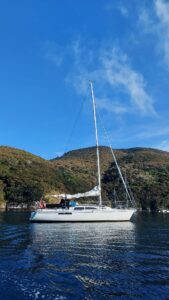
We ask for a sailing résumé because Sensation is a private bareboat yacht. Your party supplies the skipper. Our bareboat charter guide explains the arrangement; the résumé helps us discuss whether your background matches our 10.2-metre Farr 1020.
Copyable sailing resume template
1. Your contact and proposed charter
- Name and preferred contact details:
- Proposed charter dates:
- People in your party and who would skipper:
- Other crew with sailing experience:
- Questions about Sensation or the handover:
2. Sailing background
- Years or seasons sailing, with a brief description:
- Most recent time sailing as skipper:
- Types of boats sailed, including monohull or multihull:
- Largest comparable yacht you have skippered, with length:
- Typical sailing area and conditions you have experienced:
- Relevant courses, certificates and dates completed:
3. Recent trip log
Repeat this entry for your most relevant trips. A few clear records of recent, comparable experience are more useful than a long list that leaves your role unclear.
- Month and year:
- Yacht name or type, length and steering arrangement:
- Departure area and places sailed:
- Trip length, nights aboard and approximate distance if known:
- Your role: skipper, watch leader or crew:
- Tasks you personally handled:
- Conditions encountered and how you adapted the plan:
- Owner, instructor or charter contact who could verify the trip, if appropriate:
4. Practical experience to describe
- Handling a yacht under engine, including close-quarters manoeuvring:
- Departing and returning to a berth:
- Anchoring and checking the boat’s position:
- Sail handling and reefing:
- Reading charts, planning a route and using navigation equipment:
- Using marine VHF and communicating with crew:
- Tender and outboard experience:
- Any areas where you would like to refresh your skills:
How to turn a sailing log into a clear resume
Start with the experience that is closest to this charter. Someone who has recently skippered a cruising monohull on a multi-day coastal trip should put that before older dinghy racing or time aboard as a passenger. Include both types of experience, but label them accurately.
Use short factual entries. A useful structure is: date, boat and length, area, your role, duration and tasks. If you do not remember a distance or boat specification, say that it is approximate or leave it out. Do not turn time spent aboard into skippering time.
For each trip, explain what you did rather than relying on phrases such as ‘experienced sailor’. Did you plan the route, handle the berth, manage sail changes or organise the crew? The distinction helps us ask the right follow-up questions.
Bareboat charter qualifications and practical experience
Include relevant qualifications and the dates you earned them. Then show how you have used those skills since. Certificates, recent practice and familiarity with the type of yacht each tell us something different. Our discussion considers your experience with the boat and holiday you want.
Sensation has tiller steering, an optional autopilot and a 30HP Volvo diesel. If most of your experience is on another type of vessel, explain the difference. Check Sensation’s dimensions and equipment before sending your résumé, so you can highlight the most relevant experience.
A recreational sailing resume is not a crew-job CV
This template is for someone enquiring about self-skippered yacht hire. You do not need a career statement, employment history or a polished design. A readable document with honest voyage records works well. Professional yacht-crew job applications have different requirements.
If two people will share sailing duties, describe each person’s experience separately. Identify who will take overall responsibility as skipper and explain how the rest of the crew will contribute. Being clear about roles is more helpful than adding everyone’s experience together into one total.
Keep a digital sailing resume
Save your completed template in a document you can update after each trip. Keep a dated master copy and export a PDF when you need to share it, so the layout stays readable. Plain email text also works for an initial enquiry. Include your own role on every trip rather than sharing a whole crew log with no explanation.
A useful fill-in sentence is: In (month/year), I sailed a (length/type) yacht in (area) for (duration), acting as (role). I personally handled (tasks). Replace each placeholder with your actual experience, and add one sentence about conditions or decisions that mattered.
Before you send it
- Check that recent trips have dates and boat sizes.
- Separate skipper experience from crew experience.
- Name qualifications accurately and include their dates.
- Explain any long gap since your last comparable trip.
- Tell us about your crew and the holiday you have in mind.
- Ask about any unfamiliar equipment or arrangements.
Once the sailing discussion is underway, our clothing and packing guide and provisioning checklist help with the practical holiday preparation.
Contact us with your preferred dates and sailing background. We will discuss your experience and the arrangements for chartering Sensation.
Questions before you go
How long should my sailing resume be?
Use enough space to show your recent relevant experience clearly. A concise summary and a few detailed trip entries are more useful than a long, vague history.
Does completing the template confirm my booking?
No. We use your sailing experience to discuss suitability before confirming the charter arrangements.