Home / Monohull or catamaran
A catamaran has two hulls; a monohull has one. For a charter holiday, the useful comparison is how the boat feels to sail, how your crew uses the space and whether the skipper is comfortable handling it. Neither type is the best choice for every crew or every trip.
We charter Sensation, a 10.2-metre Farr 1020 monohull, from Opua. This guide compares boat types so you can decide what matters to you before choosing a yacht. For the arrangements behind a self-skippered holiday, read our bareboat charter definition.
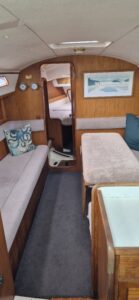
Catamaran vs monohull at a glance
| Factor | Catamaran | Monohull |
|---|---|---|
| Layout | Two hulls; wider shared living area. | One hull; more compact living space. |
| Motion | Usually less heel; still moves in waves. | Heels under sail; movement affects daily tasks. |
| Handling | Greater beam; engine layout varies. | Narrower beam; steering and propulsion vary. |
| Crew fit | Useful when separate spaces matter. | Useful for a crew comfortable sharing space. |
| Compare | Actual draft, layout and complete quote. | Actual draft, layout and complete quote. |
Monohull vs catamaran living space
A wide catamaran can give people more places to spread out, with sleeping areas in separate hulls and a central saloon. That can appeal to crews who put privacy and shared social space first. Size and layout still vary considerably, so compare the plan of the yacht you would actually book.
A monohull’s accommodation is more compact. The saloon, galley and berths are close together, which can work well for a crew happy to share everyday space. It also makes packing lightly and agreeing where belongings go more useful.
Sensation has two double and two single berths, a saloon and a galley with fridge, freezer and a two-burner gas oven. Berth descriptions explain the layout; discuss your full party with us to confirm suitability. See Sensation’s interior and specifications and imagine everyone cooking, eating and getting ready for a shore trip.
Motion, heel and comfort
The heel of a monohull is part of the sailing experience. Some sailors enjoy that feedback through the boat; others place more importance on having a level living area. Think about how your crew will manage ordinary tasks such as moving below, making lunch and carrying a drink.
A catamaran’s reduced heel does not mean it is motionless. Sea state, wave direction, speed and the individual design all change the ride. A comparison based only on a calm-water photograph says little about how a particular passage will feel.
Both types require weather-aware planning. A comfortable holiday is helped by choosing suitable days and routes, leaving time in the itinerary and being willing to change a stop. Neither hull type removes the need for an experienced skipper or makes every anchorage comfortable.
Sailing performance and handling
Performance depends on the design, sail plan, load and conditions. Avoid choosing from a claim that one whole category is always faster or easier. Your practical familiarity with the yacht matters when you leave a berth, manoeuvre in close quarters or organise a sail change.
A catamaran’s greater beam affects the space it needs. Twin-engine layouts can handle differently from a single-engine monohull. These are skills to understand before the holiday, rather than assumptions to test after departure.
Sensation has tiller steering, an optional autopilot and a 30HP Volvo diesel. Tell us what you have sailed recently and how it compares. Our sailing resume template helps you describe boat sizes, skipper roles and practical experience.
Draft, landing and the shore part of your trip
The yacht’s draft is one part of route and anchorage planning. It is not a permission to enter any shallow bay. Charts, tides, conditions, local restrictions and the agreed cruising area still determine where you can go.
Think about going ashore as well as sailing. Sensation carries a 2-metre inflatable tender with a 2.5HP outboard. Discuss your crew’s needs and the tender arrangements during handover. Decide on a manageable shore outing and leave time to return to the yacht.
Compare the total charter cost
Compare quotes for the same dates, duration and inclusions. A boat with a higher daily rate may include something another quote treats separately. Fuel, food, linen and optional equipment can change the trip budget, while a refundable bond should be kept separate from spending.
Sensation’s daily yacht rates are NZ$500 off-peak, NZ$580 mid-season and NZ$600 in peak periods, with five- or seven-day minimum charters depending on the dates. Our rates and booking page shows the seasons and extras. Use those actual figures when comparing your options.
Buying and maintaining a yacht is a different decision from chartering one. Purchase price, ongoing maintenance and berth costs do not provide a reliable shortcut to your holiday price. For a charter, compare the boat, agreement and complete trip budget you are being offered.
Catamaran or monohull: a crew decision checklist
- Do we want more separate living spaces, or are we comfortable sharing a compact saloon and galley?
- What comparable boats has our skipper handled recently?
- How important is a relatively level living area to the crew?
- Can everyone manage the boarding and shore-transfer arrangements?
- Does the actual sleeping layout work for us?
- Have we compared full costs, conditions and minimum charter lengths?
If a compact cruising monohull sounds right for your crew, talk to us about sailing Sensation. Bring your preferred dates, sailing background and the things that would make the holiday work well for your party.
Questions before you go
Is a catamaran always more comfortable?
Not in every condition. Catamarans generally have less heel, but the individual boat, weather, sea state and your crew's preferences all affect comfort.
Does Bay Charters offer a catamaran?
Our yacht is Sensation, a 10.2-metre Farr 1020 monohull. Talk to us about her layout and your sailing experience.